4 Ways to Sell with Content – Case Study

How can a small business use content to sell? Which content marketing activities work best? And can you do them too? In this case study, I will present several methods and communication channels that have helped us grow in both the number of followers and course sales.
What do we work on in terms of content?
After being approached by Tomas, the founder of Psichologie, I started taking care of their social media, which had almost 7.000 followers (07/2023). I edited reels from podcasts and courses, created posts from blog articles or current topics, and managed the blog. Later, Tomas began to delegate more and more tasks to me, including editing the podcast, publishing videos on YouTube, proofreading blog articles, or writing articles for a dog magazine.
Currently I'm in charge of more or less all the content. I have some things under my control (e.g. social media and newsletter), I collaborate on some things with Tomas or other trainers (e.g. podcast or articles for the magazine and blog). At the same time, we regularly brainstorm about content, business goals or generally about further development of marketing and improvement of services.
What does Psichologie gain from the content?
For many companies, content creation is an afterthought. They don't have time, they think it's a waste of money, or they don't know how to do it. Psichologie is a great example, where I would like to show you what the content brings and explain how it actually works.
We can compare it to paid advertising, for example. Paid advertising is like a casual date – it is important to impress and make a good first impression so that you can invite them to your place. Often on a one-off, non-binding basis. But content creation is more like serious dating, in the sense of regular meetings, building a relationship and “falling in love”. You meet more and more often, until the person simply says “yes” (= in this case, buys something from you).
Side effects of the content
Of course, content doesn't have to be purely aimed at conversions and sales. It can have other or partial goals, I call them side effects.
In addition to sales and orders, content also brings:
- Followers on social media who not only purchase (repeatedly), but also share posts, recommend products and support the project based on its vision,
- Contacts in the form of other coaches (competitors), partners who support the creation financially, or people from the media,
- A community of similarly enthusiastic people who find our content helpful and thanks to this, we manage to improve the lives of the real end customers – dogs.
Thanks to these side effects, you can generate conversions that come regularly. Not necessarily right away. It's not a sprint, it's a marathon. I once heard that if you want to have a steady, regular income even in business, you shouldn't sell, but build a community of people who face a problem that you can solve, or people who are as passionate about some topic as you are.
How to sell through content
Psichologie makes a living by selling online dog training courses. With every piece of content it produces, it brings people closer to what it does, gives them space to identify with the problems they are likely to be dealing with their canine friends, and offers solutions.
Podcast
When someone records their own podcast, it looks quite professional. And it can also boost your sales. Every week, Tomas Nushart invites the best animal trainers in Czechia who use positive reinforcement, or other experts (veterinarians, animal physiotherapists, etc.), to his podcast Neštěkej na svého psa (Don't bark at your dog). These are often people who have their own course at Psichologie.
In the podcast, together with the guest, they discuss a specific problem that the target audience is dealing with (e.g., pulling on the leash, recall, dog sports, dental care...), but also current topics related to ethical training and breeding (dog breeding mills, boundaries in modern training...).
This allows us to attract new people, expand the community, or convince followers to purchase one of the courses. Each podcast can earn several hundred to thousands of dollars.
We have also recently launched herohero, where entire episodes of the podcast are paid, but people can listen to the first 20 minutes where they are used to.
Newsletter
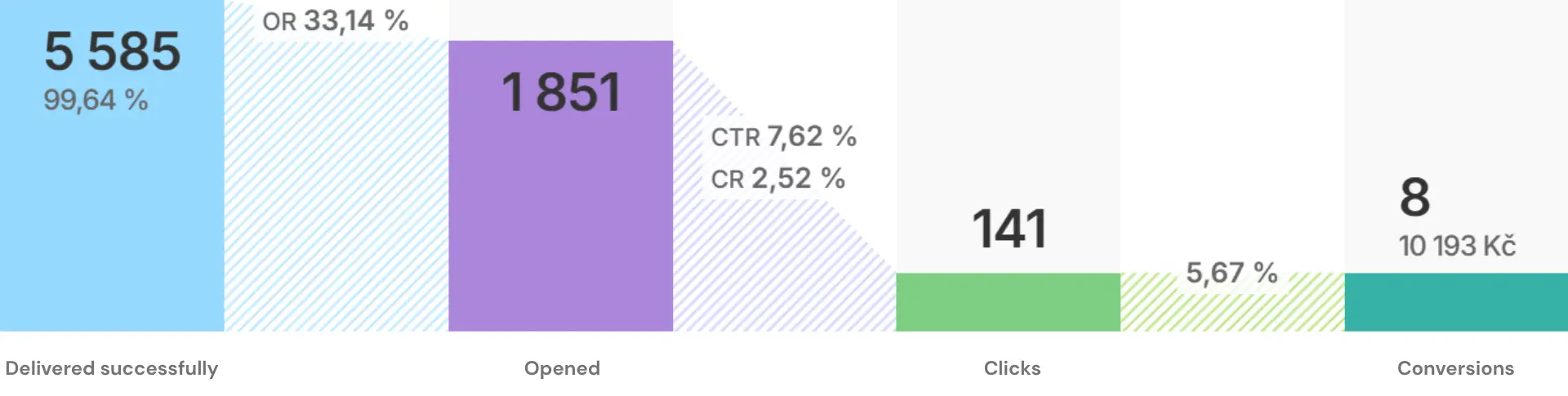
No one likes sales emails. That's why my newsletter primarily focuses on practical tips for training or caring for dogs. Only then do I mention the latest podcast episode, other articles, or offer readers solutions in the form of courses. Each newsletter, which is published every week, earns hundreds of dollars thanks to sales of courses and Tomas's book Neštěkej na svého psa (Don't Bark at Your Dog).
Blog articles
Articles on the Psichologie blog are written by selected trainers, often big names in the field. These articles are not the main source of income; they mainly serve to build expertise and improve SEO. Even so, there are a few sales elements in them. For example, I add links to related courses to the article.
Social networks
Communication channels that require the most energy but also bring the most value. For now, I focus on Instagram and Facebook, where I post the same content (despite the fact that each network requires something slightly different). Creating completely new posts on Facebook is not worth it, as attention is focused on Instagram, which is more successful, while Facebook is more of a secondary network.
I use the Publer tool (formerly Anchor) for planning. I post once or twice a day and combine different types of posts:
- Reels – these aim to increase reach and bring in new followers who are not yet in the DO phase (i.e. they will not buy from us), so in the videos we mention simple problems and their solutions, current topics, tips or ideas from the podcast/book.
- Static posts, carousels – these are intended for existing followers who are addressing advanced training topics and are more likely to make a purchase. Most often, these are excerpts from blog articles or various questions for followers (the basis for UGC – user generated content).
In 2025, the project went through a rebranding process, got a new website and graphics, and together we also created a new marketing strategy and content plan. We recently exceeded 15k followers (11/2025).
The networks serve to increase brand awareness, build community, sell and present the vision, mission, and products of the project. The goal is not revolutionary growth or the creation of viral videos – we focus on the values mentioned above.
Summary
How can you sell with content?
- Build a community of people who will shop regularly and recommend you.
- Have a plan and a strategy. It's not enough to just "post something".
- Be consistent – not only in posting, but especially in communication.
- Know your customer's journey and figure out when and to whom to sell.
- Primarily deliver value and put sales on the back burner.
- Have multiple communication channels and monitor their performance.
- Build a strong brand, perhaps thanks to uniform graphics and communication style.
- Don't waste money on something that doesn't work – invest in something that does.
- Tune your texts to lead readers to a purchase (or other action).
And if you're not sure if you're "doing the content right", don't know how to start, don't have the time, or want to create better content that will meet your business goals, I'd be happy to help you with that.
Contact me and make the most of your company's content potential. You can use my email address adel@adelapro.com or the contact form.